

Our last post was about preparing before anything goes wrong: knowing what cannot wait and making sure recovery works. This one is about the day something does go wrong. The checkout stops working, the site starts behaving strangely, or a customer calls to say something looks off.
In those moments the technical problem is only half the story. The other half is how the business responds: who decides, what customers hear, and whether the fix sticks.
Keep the business open while the site is fixed
Your website is one way customers reach you, not the only one. Decide now how you would keep serving them if it were unavailable for a few hours. Orders could come by phone or email. Bookings could be taken by hand and entered later. A short note on your social channels can point people to the right place.
Write those fallbacks down and make sure your staff know them. When the site has a bad day, the business carries on, and the team working on the site can focus on fixing it properly.
Keep the list short and somewhere everyone can find it without the website: a shared document, a printed page by the phone or a pinned message in your team chat. Include who to call about the site and how to reach them out of hours.
Choose safe over fast
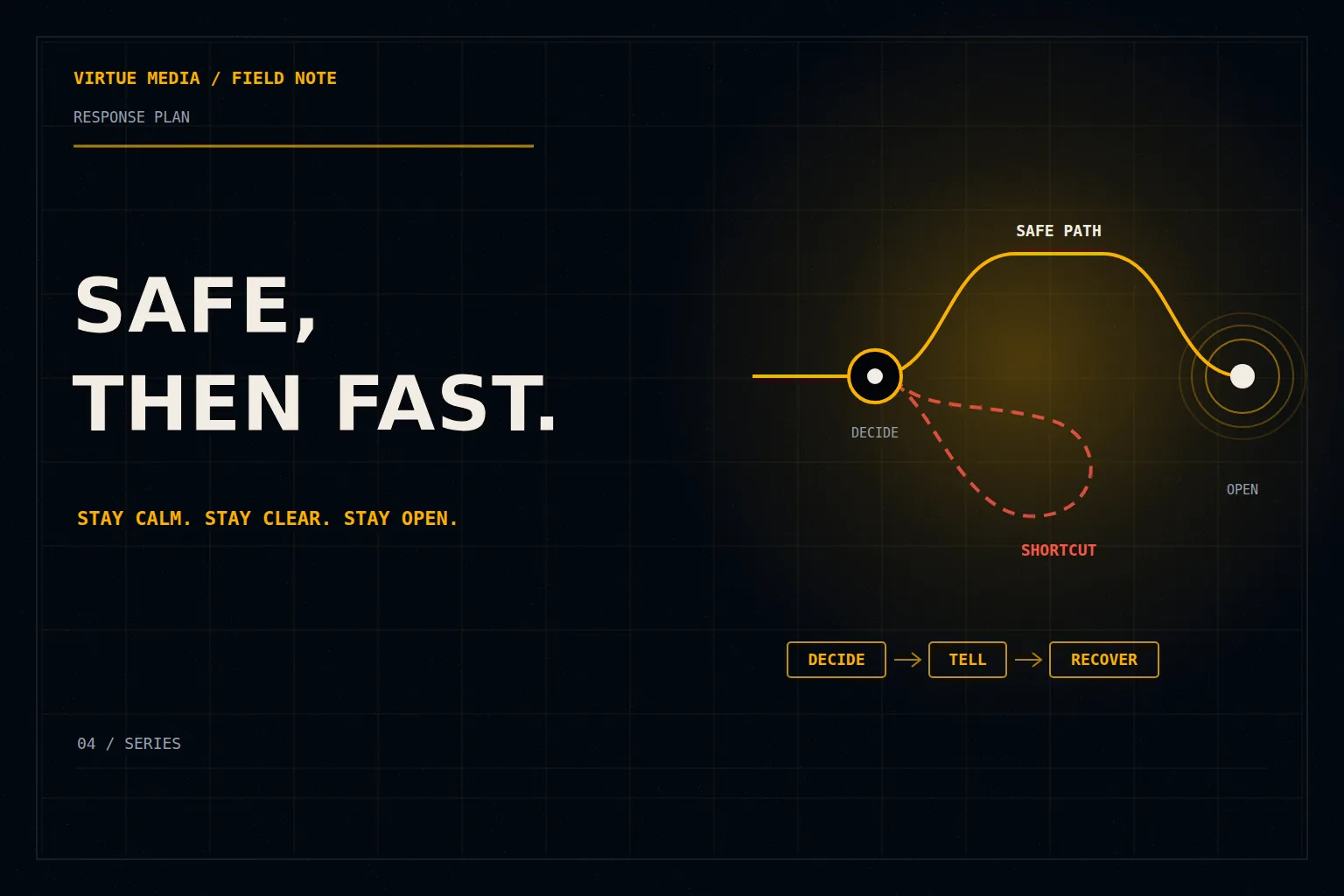
The natural instinct is to get the site back up as quickly as possible. Usually that is right. When there is any chance that someone has interfered with the site, though, the fastest path can turn out to be the slowest. Bringing a site straight back without understanding what happened can bring the same problem back with it.
Teaching view / two ways back
Safe, then fast
- Back online in minutes
- The cause is still there
- The same problem returns, and you start again
- Understand what happened
- Close the door it came through
- Bring the site back
- Confirm everything works
- Back to business, once
- What we knowThe confirmed facts, nothing guessed.
- What we are doingThe action under way and who owns it.
- Next updateA specific time, then keep it.
This is where experience matters. A capable team's first job is to understand what happened and close the door it came through. Only then do they bring the site back and confirm everything works. That can take a little longer, but the business returns to normal once, rather than twice.
Your part is a decision you can make in advance: one person in the business who has the authority to approve that kind of call, with a named backup when they are away. That person does not need to be technical. They need to be reachable and trusted to decide.
Tell people what they need, when they need it
Silence makes any problem feel bigger. Clear, regular updates do the opposite. Inside the business, staff need to know what is happening, what to tell customers and when they will hear more. Outside, customers need to know whether they are affected and what to do in the meantime.
A simple pattern works for both audiences: what we know, what we are doing, and when we will update you next. Then keep that promise, even if the update is "still working on it." Avoid guessing at causes in public before they are confirmed. If customer information might be involved, take advice before saying anything publicly, because there may be rules about how and when to notify people. Our post on what to say in the first 24 hours of a reputation issue goes deeper on the wording.
Learn from it, then move on
Once things are back to normal, take fifteen minutes to note what happened, what worked and what you would do differently. Update your fallbacks and contact list. That short note makes the next bad day easier.
With a capable team behind your website, most bad days stay small. If you would like help putting a simple response plan in place, or want a team that is ready to act quickly when it counts, contact us.
0 Comments